
Kitchen Renovations
The kitchen is often the heart of the home, a place where design, daily life, and entertaining naturally come together.
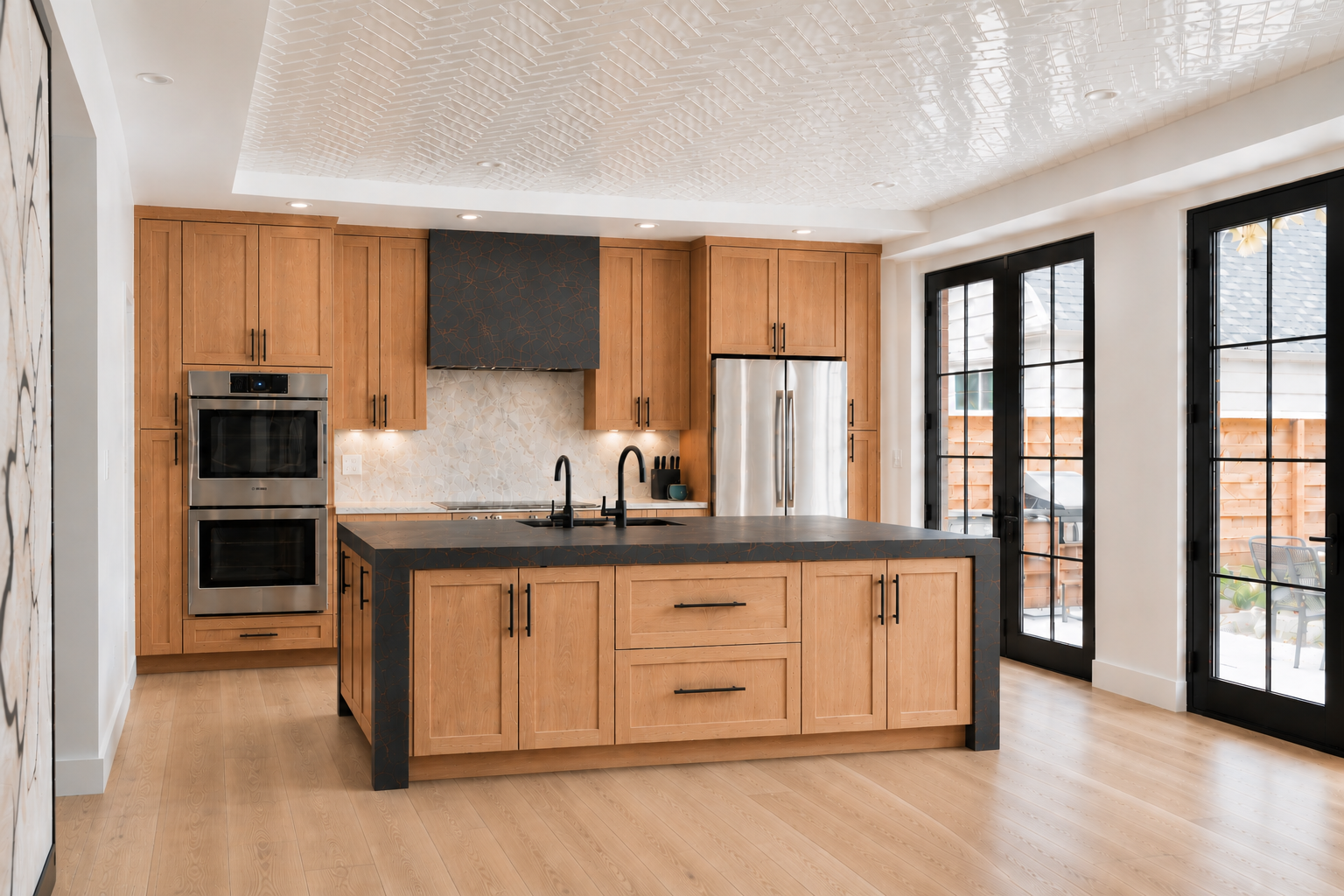
Through a thoughtful design-build approach, kitchens are reimagined to enhance natural light, improve spatial flow, and integrate modern appliances and materials while remaining harmonious with the architecture of the home.
Many homes across Washington, D.C., Bethesda, Chevy Chase and Northern Virginia were built between the 1920s and 1950s were designed around smaller kitchens separated from primary living spaces.
A well-planned renovation allows these kitchens to evolve into welcoming gathering spaces—integrating cooking, entertaining, and everyday living while respecting the architectural character of the home.
Through thoughtful planning and construction expertise, NGage Properties Group transforms kitchens into environments that feel both timeless and functional.
What a Kitchen Renovation May Include
Every kitchen renovation is unique, but comprehensive projects often involve a combination of architectural reconfiguration, interior design refinement, and technical upgrades.
• Custom cabinetry and millwork
• Architectural lighting design
• Stone countertops and backsplash materials
• Expanded kitchen islands for entertaining
• Professional appliance integration
• Reconfigured layouts for improved flow
• Flooring and ceiling architectural detailing
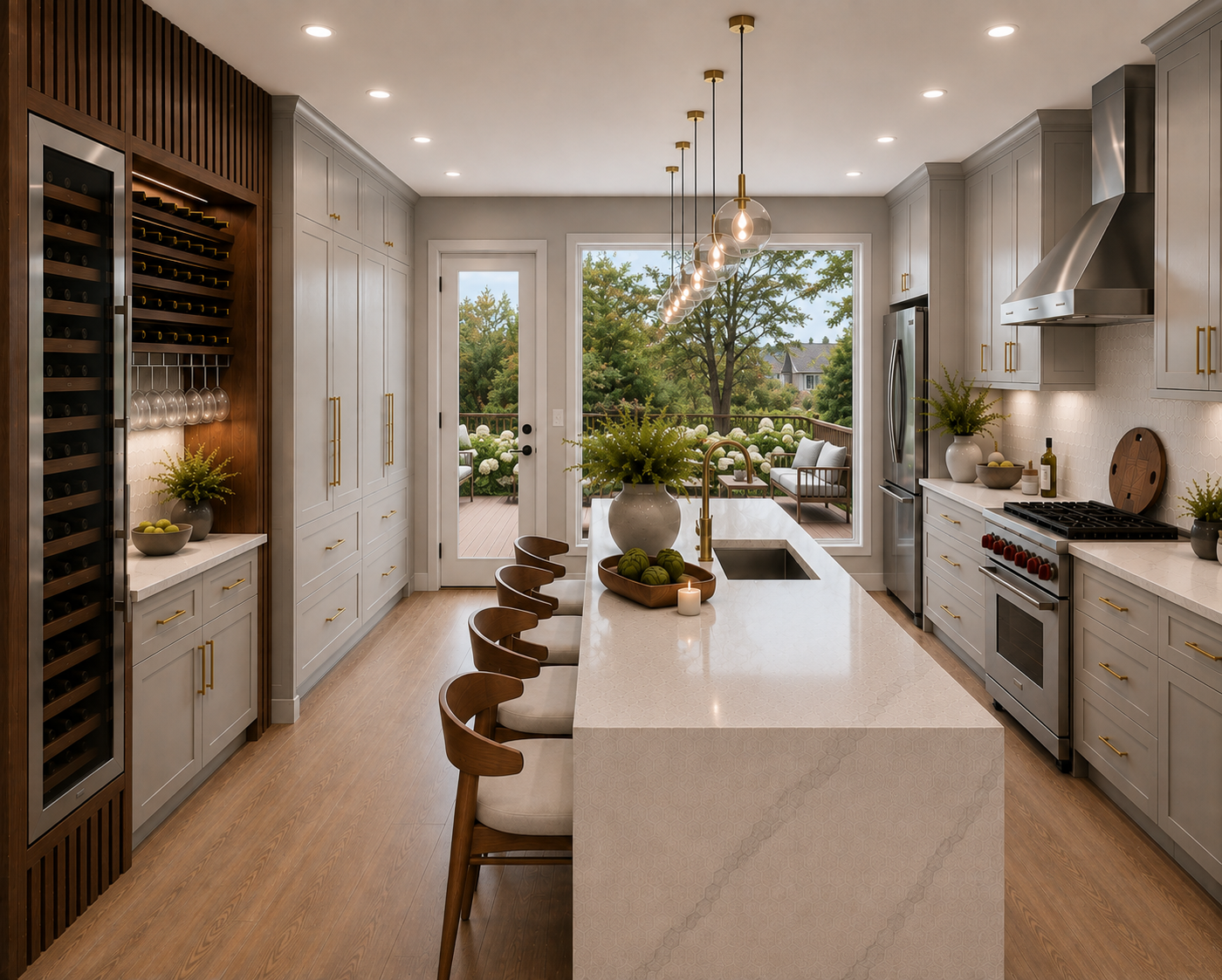
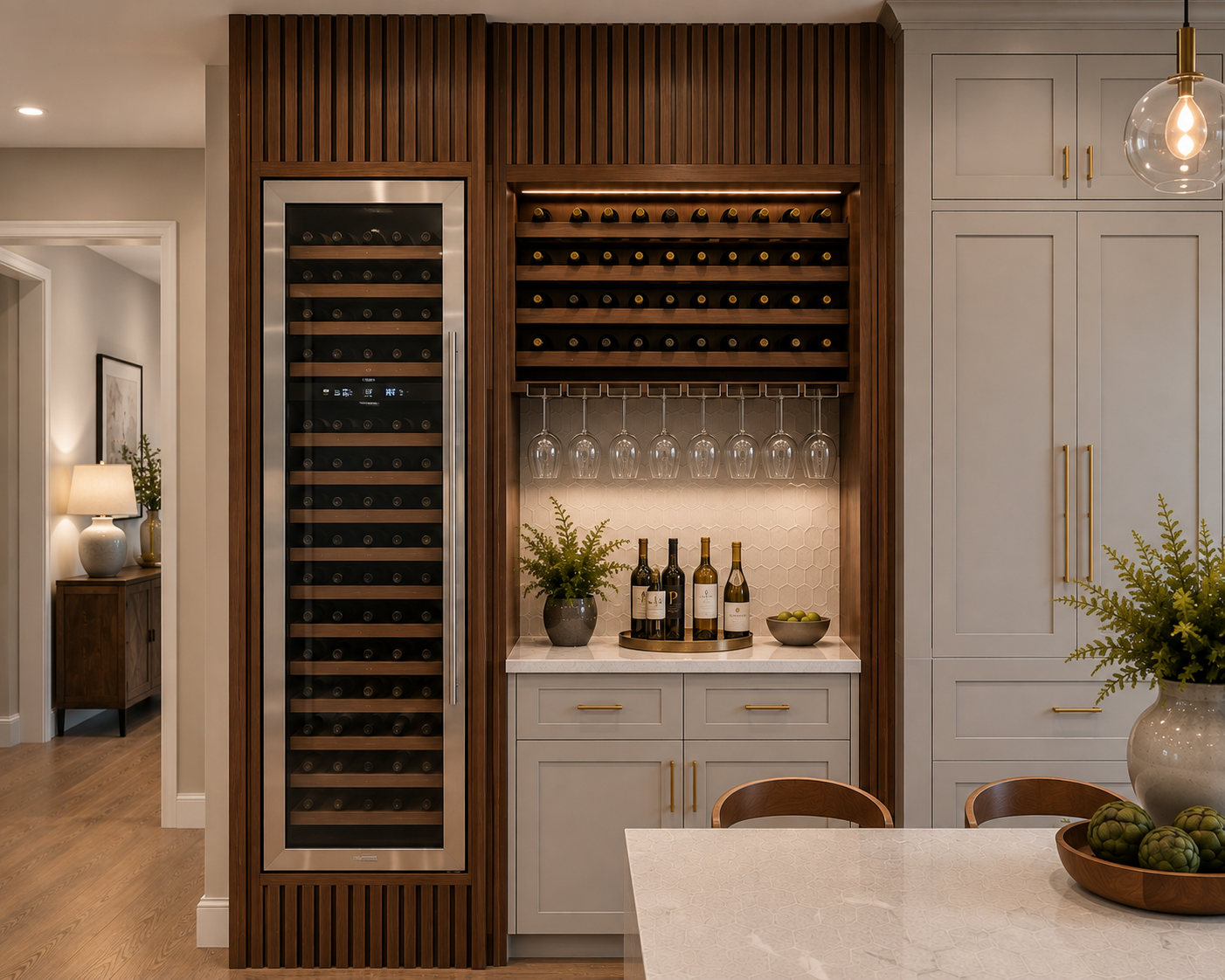
Architectural Integration
A successful kitchen renovation respects the architecture of the home itself.
Across the Washington region, homes may range from Victorian rowhouses and early-20th-century bungalows to Cape Cods and mid-century family homes.
Rather than imposing a design that feels disconnected from the structure, the NGage Properties Group approach carefully integrates new kitchen environments with the home’s original architectural language.
The result is a kitchen that feels as though it was always meant to be there.
Why Clients Choose Us
Our clients are not looking for the lowest bid. They are looking for clarity, leadership, and refined execution.
They choose us for:
Integrated design-build accountability
Structural and architectural fluency
Controlled, communicative project management
High-end material integration
A composed, concierge-level experience
A kitchen expansion is a significant undertaking. It should feel organized — not chaotic.
We accept a limited number of home addition projects each season to ensure disciplined execution and leadership attention.
“We are in love with our new kitchen! By renovating our kitchen, NGage Properties Group transformed our entire house. Our family of five now feels much more comfortable in our living space. If you are looking for a beautiful and functional transformation, I highly recommend the NGage team.”
kitchen renovation fAQs
Still have questions? Take a look at the FAQ or reach out anytime. If you’re feeling ready.
How much does a kitchen renovation cost in Washington, DC, Bethesda, or Northern Virginia?
Costs depend on square footage, whether the layout is being reconfigured or walls removed, cabinetry and millwork, appliance selections, and countertop/material choices. Because many of our kitchen projects also touch structural or mechanical systems, we provide a detailed estimate after understanding your specific scope. See our Financing page for guidance.
How long does a kitchen renovation take?
Most kitchen renovations move through design, permitting, and construction phases, with cabinetry and appliance lead times often driving the schedule. A kitchen renovated within a whole-home project follows that project's timeline; a standalone kitchen renovation typically moves faster. We map milestones early so you can plan confidently.
Do I need permits for a kitchen renovation?
Yes, particularly if plumbing, gas, or electrical lines are being moved, or if a wall is coming down to open the layout. Permit requirements vary across DC, Maryland, and Northern Virginia jurisdictions, and we manage that process in-house as part of our design-build approach.
Can I live in my home during a kitchen renovation?
In many cases, yes, especially with a temporary kitchen setup. If the renovation is part of a larger whole-home project or involves major structural changes, temporary relocation may be worth considering. We assess this during planning and help you prepare either way.
Will a kitchen renovation increase my property value?
Kitchens are consistently one of the highest-return renovations, particularly in established markets like Bethesda, Chevy Chase, and DC. Renovations that respect the home's original architecture, rather than looking disconnected from it, tend to perform best with future buyers.
What's the difference between a kitchen expansion and a cosmetic kitchen refresh?
A refresh updates finishes, cabinetry, and countertops within the existing footprint. An expansion involves reconfiguring the layout, removing walls, or extending the kitchen's footprint entirely, often to create better flow with adjacent living or dining spaces. We help you determine which fits your goals and budget.
How do I prepare for a kitchen renovation consultation?
Helpful items include existing floor plans (if available), inspiration images, a general budget range, and a sense of your priorities, whether that's more storage, better flow, or an expanded footprint. If you don't have these ready, we guide you through structured discovery.
Why choose a design-build firm for a kitchen renovation?
Design-build integrates architecture, engineering, permitting, and construction under one accountable structure, particularly valuable when a kitchen renovation involves structural changes or ties into a larger home renovation. It reduces miscommunication and keeps design decisions aligned with construction realities from the start.