Need More Space in 2026? What Homeowners Need to Know Before Planning a Home Addition
Insights drawn from over 12 years of designing and building home additions across Washington, D.C., Montgomery County, and Northern Virginia - including historic and legacy homes dating back to the late 1800s.
By Nicole Butler, Founder & CEO, NGage Properties Group
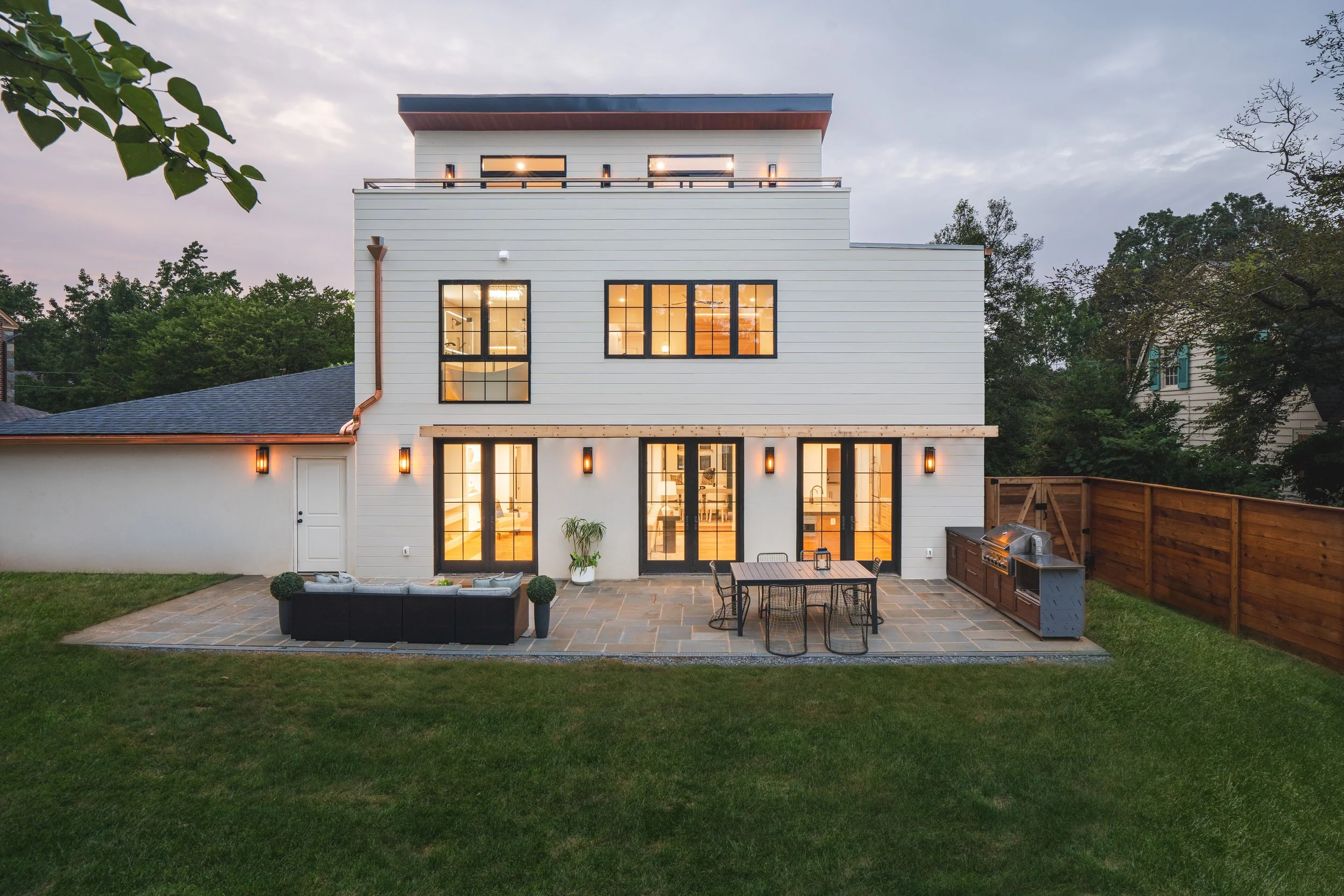
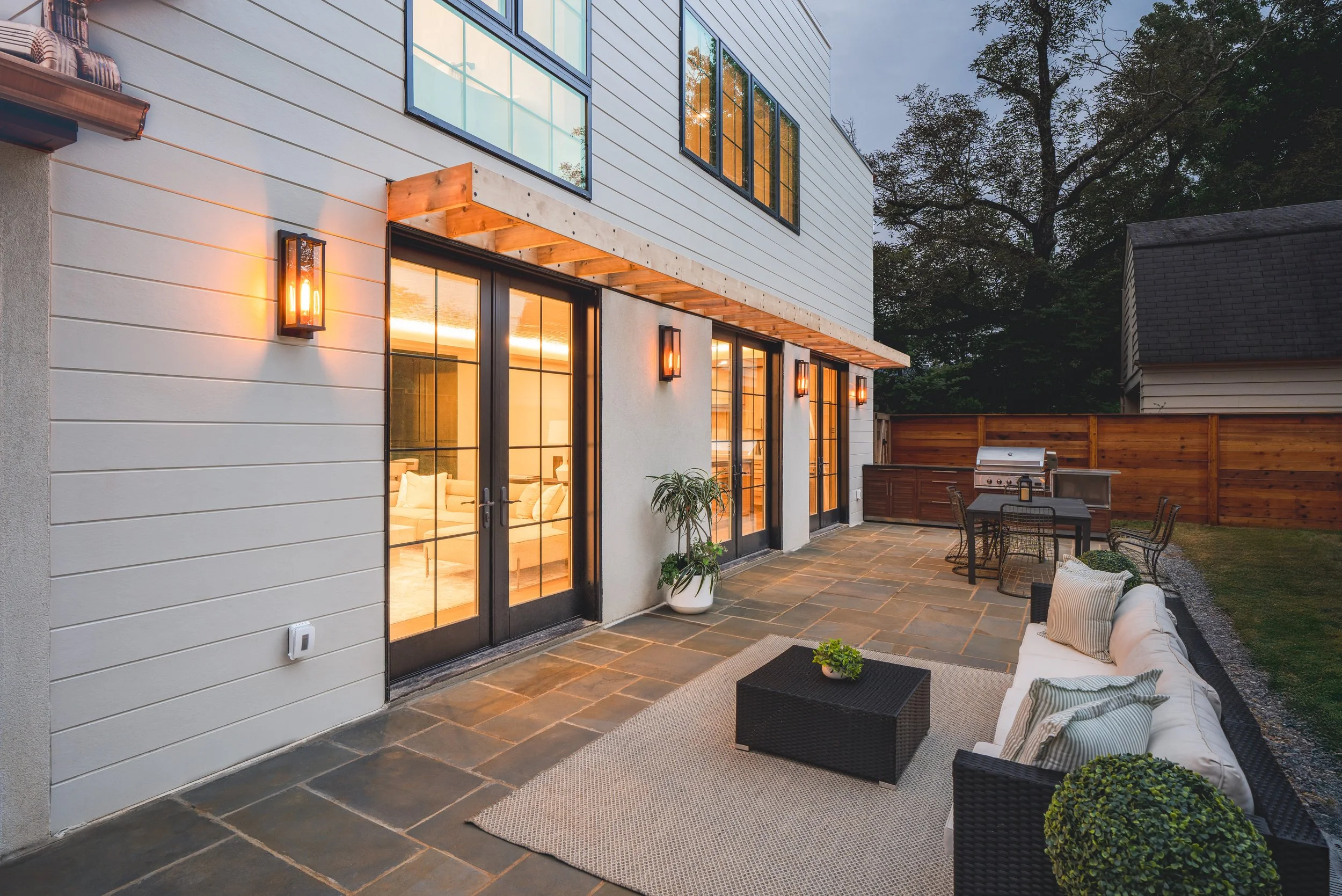
Two-story rear addition with rooftop deck and seamless indoor-outdoor transition — NGage Properties Group
Home additions are quickly becoming one of the most thoughtful ways homeowners across Washington, D.C., Bethesda, Chevy Chase, and Northern Virginia are creating the space they need without leaving the neighborhoods they carefully chose. Each week we meet with homeowners across the Washington, D.C. metropolitan area who have already solved one of the hardest problems in real estate—they found the right location. The next challenge is equally important: can the home itself evolve to support the way they want to live today?
In This Article:
• Realistic home addition costs in 2026
• Typical renovation timelines in the DC region
• Zoning and permitting considerations
• Whether expanding or moving makes more sense
*Prefer a downloadable PDF? Download it here
Sometimes that decision was made decades ago. We regularly work in homes built in the 1890s, 1910s, 1940s, and mid‑century eras—row homes, Colonials, Tudors, ramblers, Craftsman, and early post‑war houses that were beautifully built for another time, another way of living.
What’s changed isn’t the neighborhood. It’s life.
For some, that change looks like children growing—or leaving. For others, it’s a career promotion, a shift to executive‑level responsibility, or simply the clarity that comes with knowing exactly how you want to live now. We work with families, couples, and single professionals—women and men—who have earned the right to want more space, better flow, and a home that reflects who they are today.
The common thread is not desire. It’s requirement.
Eventually, the same question surfaces:
Should I sell and start over—or can this home evolve with me?
That’s when we begin to explore what’s possible.
At NGage Properties Group, we've spent nearly 13 years designing and building additions and whole‑home transformations throughout the DMV — and we're honored to be included on the Historic Registry list in the region. Our full scope of residential design-build services reflects that depth: architecture, interior design, and construction delivered under one roof for homeowners who expect more than a contractor. We understand how to reimagine older homes in two equally sophisticated ways:
By strategically preserving architectural character while upgrading structure, mechanical, electrical, plumbing, and layout to today’s living standards.
Or, completing a comprehensive overhaul to fully reimagine the space with today’s contemporary design aesthetics. Whether through bright, light and airy spaces with clean lines or moody dramatic spaces.
For many homeowners in 2026, adding a home addition—done correctly—is not a compromise. It’s the most strategic choice.
What is a home addition?
A home addition is not simply about square footage. It is about how space works.
An addition may involve:
Building outward with a rear or side expansion ( 1-level addition or 2-level addition)
Building upward with a second‑story, third-story or above‑garage addition
Reclaiming or extending attic space. Sometimes building this addition with a rooftop deck.
Creating a new primary suite (owner’s suite or master bedroom), kitchen expansion, great room, private office, wellness space, or multigenerational living area.
Explore our Home Additions page here
In established DMV neighborhoods—where inventory remains limited and location drives long‑term value—additions offer something moving often cannot: control.
Control over layout. Control over quality. Control over how your home supports your life now—and in the years ahead.
Move or Improve? The Real Math—and the Real Considerations
From a purely financial standpoint, moving in the DMV is expensive.
Real estate commissions alone typically range from 5–6% of the sale price. On a $1.3M home in Potomac or Northwest D.C., that’s $65,000–$78,000 before considering:
Closing costs
Moving expenses
Temporary housing
Renovations required to make a new home truly livable
And that assumes you find the right home—often in a competitive market where inspections are waived and offers escalate quickly.
But beyond the math, there’s the life you’ve already built:
A commute that works
Neighbors you know
Daily rhythms and relationships that don’t show up on a listing
That said, additions are not always the right answer.
From a General Contractor’s perspective, we advise caution when:
Lots are constrained by setbacks or lot‑coverage limits
Neighborhood values cap return on investment
Structural or foundation conditions require extensive remediation
The homeowners who benefit most from additions tend to share three characteristics:
They want to stay where they are
Their lot can legally support expansion
Their home has strong underlying structure—even if the layout no longer serves them
Home Addition Types, Costs & Timelines in Washington D.C., Bethesda & Northern Virginia (2026)
Not all additions solve the same problem. Below are the project types we most frequently design and build across Washington, D.C., Maryland, and Northern Virginia, with 2026 planning ranges based on recent work. See our recent multi-level addition and full home renovation in our portfolio.
1. One-Level Addition
The most asked question we hear: "Can I add on without it looking like an addition?"
Yes — and that's exactly the standard we hold ourselves to. A single-story addition should feel like it was always part of the home. Whether extending the kitchen into a true chef's space, creating a light-filled great room that opens to the outdoors, or building a ground-floor primary suite for aging in place, a well-designed single-story addition improves how every room around it functions — not just the new space itself.
Single-story additions are also the most permit-efficient of all addition types. In most jurisdictions, they move through plan review faster than two-story or structural pop-up projects — which matters when your timeline has a real deadline.
What homeowners often don't consider: The connection between new and existing space is where single-story additions succeed or fail. Floor level transitions, roofline integration, window alignment, and mechanical tie-ins all require architectural discipline from day one. This is where design-build integration pays for itself.
Best for: Kitchen expansions, great rooms, primary suites, sunrooms, family rooms Investment range: $350–$450 per square foot Active construction timeline: ~12–14 weeks
Explore home additions | Schedule a consultation
2. Two‑Story Additions & 2nd Level Additions
The most asked question we hear: "How do I add significant square footage without covering my entire yard?"
Build up or up and out. A 2nd-level addition doubles your square footage on the same footprint — making it the most efficient addition type for lots with tight setbacks, lot coverage limits, or outdoor space you want to protect. On the first floor, you gain a new living area, expanded kitchen, or family room. Directly above, a new primary suite, additional bedrooms, or a private home office.
Two-story additions are also among the highest-returning investments in established neighborhoods where square footage directly drives appraised value. In markets where buyers consistently pay a premium for larger homes, the investment in a two-story addition often returns more than its cost at resale.
What homeowners often don't consider: Structural engineering is the backbone of every addition. The existing foundation, framing, and load path must be evaluated before any design is committed to — and in older homes, surprises are common once walls open. A design-build team that includes structural engineering from day one prevents costly mid-project redesigns.
Best for: Maximizing square footage, adding bedrooms, creating a primary suite above new living space Investment range: Starting at $450 per square foot Active construction timeline: ~24–36 weeks
View two-story addition projects | Learn about our process
3. Multigenerational Suites & In-Law Additions or Cottages
The most asked question we hear: "How do we add space for a parent without sacrificing our privacy — or theirs?"
This is one of the most personal additions we build — and one of the most thoughtfully designed. A true multigenerational suite is not a converted spare bedroom. It is an independent living environment within the home: private entrance, full bath, sleeping area, kitchenette, and accessible design features that support long-term comfort and dignity.
Done well, a multigenerational addition serves multiple life stages. Today it houses an aging parent. In five years it becomes a returning college graduate's first home base. A decade from now it generates rental income or accommodates a live-in caregiver. The investment compounds over time in ways that few additions can match.
What homeowners often don't consider: Accessibility standards matter from day one — not as an afterthought. Zero-threshold entries, wider doorways, grab bar blocking, and single-level living arrangements should be integrated into the design before permits are pulled. Retrofitting these features after construction is significantly more expensive.
Best for: Aging parents, aging in place, adult children, long-term guests, rental income, live-in caregivers Investment range: $400–$650 per square foot Active construction timeline: ~14–20 weeks
Schedule a private consultation | Areas we serve
4. Above‑Garage Additions
The most asked question we hear: "Is the space above my garage usable — and what would it actually cost?"
In most cases, yes — and it is one of the most underutilized opportunities in residential renovation. An above-garage addition converts dead airspace into a fully finished, functional room without touching your home's primary footprint or disturbing your main living areas during construction.
The structural foundation — the garage walls and roof framing — is already in place. That means this addition type is typically faster to permit, faster to build, and less disruptive to daily life than most alternatives. The result is a private, separated space that works exceptionally well as an executive home office, a guest suite with its own entrance, a teenager's retreat, or a rental unit.
What homeowners often don't consider: Garage ceiling height and existing roof structure determine feasibility before any design begins. Some garages require structural reinforcement before an above-garage addition is possible. We assess this in the consultation — before any design investment is made.
Best for: Executive home offices, guest suites, bonus rooms, rental units, teenager retreats Investment range: $350–$400 per square foot Active construction timeline: ~12–15 weeks
View our portfolio | Financing and pricing
5. Garage Additions
The most asked question we hear: "We need more space — is adding a garage the right first step?"
For many homeowners, a garage addition solves two problems at once: it creates the covered vehicle storage or workshop space they need today, while establishing a structural platform for an above-garage living space in the future. Building the garage with that future addition in mind — reinforced framing, proper ceiling height, pre-planned utility rough-ins — costs a fraction of retrofitting later.
A finished garage addition also adds meaningful square footage to a home's total footprint, which positively influences appraised value in markets where enclosed storage and covered parking are premium features.
What homeowners often don't consider: The difference between a basic garage structure and a finished, heated garage is significant — both in livability and in long-term value. A basic structure may serve immediate needs, but a fully finished garage with insulation, climate control, and refined detailing (such as built in shelving, bike storage, flooring considerations, EV plugs, etc.) performs as a true extension of the home rather than a utilitarian afterthought.
Best for: Vehicle storage, workshops, future above-garage living space, increasing appraised square footage Investment range:
Basic structure: $300–$350 per square foot
Finished/heated space: $350–$450 per square foot
Active construction timeline: ~8–12 weeks
Explore our services | Schedule a consultation
A note on investment ranges from our design team: Finish level matters. In areas we serve (such as Chevy Chase, Bethesda, Washington, D.C., Fairfax and Arlington County Virginia) additions with custom millwork, globally imported finishes, integrated lighting, and refined material selections will invest differently than a builder‑grade solution. These ranges reflect typical 2026 conditions — not absolutes. Visit our financing and pricing page for a deeper breakdown.
What Home Additions Really Cost in 2026
For planning purposes, most high‑quality additions in the DMV fall between $450–$600+ per square foot.
The range exists because integration matters:
Finish level
Structural complexity
Mechanical, electrical, and plumbing upgrades
How seamlessly new space connects to existing space
Typical examples:
300 sq ft kitchen bump‑out: $200,000-$350,000
500 sq ft primary suite addition: $275,000–$350,000
1,000 sq ft two‑story addition: $450,000+
CEO insight: The most common budgeting mistake we see is underestimating connections—floor refinishing, sightline alignment, mechanical upgrades. These details elevate the result, but they must be planned early.
We recommend a 10–15% contingency, not because we expect problems, but because older homes reveal realities once walls open.
Planning the Right Way
Successful additions are decided long before construction begins. One question I often ask clients is how long they plan to stay in the house post construction? If only 3-5yrs, we should plan an investment based on that reality. If the home is their forever home, get what you want now and enjoy it!
Step 1: Define the real problem
What doesn’t work today? What must work five years from now? What does “better” actually mean for your daily life?
Step 2: Site & feasibility analysis
We evaluate zoning, setbacks, lot coverage, drainage, structural tie‑ins, and utility locations—especially critical in older homes.
Step 3: Permit‑intelligent design
Permitting timelines vary:
Montgomery County: ~6–8 weeks
Fairfax County: ~4–6 weeks
Washington, D.C.: ~6–10 weeks (longer in historic districts)
These timelines are not delays—they are part of responsible planning.
Step 4: Pre‑construction alignment
This is where scope, allowances, procurement, site logistics, and temporary living strategies are finalized. See how NPG provides true white glove concierge services
The Realistic Timeline
Smaller additions take 5–7 months from concept to move‑in Keep in mind that the “pre-construction” phase, typically takes 4-5months (architectural schematics, construction document develop with engineering sets, applying and waiting for permit approval). Historic or complex projects may take 8–12+ months depending on its complexity and the responsiveness of the historic association which oversees your home’s location.
Homeowners who plan around this timeline—and communicate priorities early—navigate the process with far less stress.
What Makes Additions Succeed
After more than a decade, the pattern is clear:
Clarity beats square footage
Process protects investment
Disruption is real—plan for it
Communication prevents problems
Decisions drive schedules
Key Takeaways for Homeowners Considering a Home Addition in 2026
For homeowners across Washington, D.C., Bethesda, Chevy Chase, and Northern Virginia, the decision to expand a home rather than move is becoming increasingly common. Before beginning a home addition project, there are several factors worth considering.
Neighborhood value matters.
Many homeowners exploring additions have already secured a home in a location they value. Expanding the existing home often allows families to remain rooted in the neighborhoods they love while adapting the property to modern living.
Planning and permitting take time.
In jurisdictions throughout Montgomery County and Washington, D.C., zoning reviews, structural planning, and permitting approvals can influence the overall project timeline as much as the construction itself.
Older homes require thoughtful integration.
Homes built between the early 1900s and mid-century often require structural updates when expanding. Careful architectural planning ensures additions feel integrated with the existing home rather than appended to it.
A strategic plan leads to better outcomes.
The most successful home additions begin with a clear understanding of the home’s structure, zoning allowances, and long-term goals for the property.
Frequently Asked Questions
Do I need a permit?
Yes—nearly all additions require permits.
Can I live in the house during construction?
Sometimes yes; but we do not recommend it.
Is an addition always better than moving?
Not always. Lot constraints and structure matter. This is where we partner well with our highly rated preferred Realtors.
How long has NGage Properties Group done this work?
More than 12 years across Washington, D.C., Montgomery County, and Northern Virginia.
Your Next Step
If you’re considering an addition, you don’t need a sales pitch—you need clarity.
Start by defining the problem you’re solving, understanding your property’s constraints, and getting realistic about budget and timeline.
When you’re ready, we’ll meet you at your home, walk the property, and talk through what’s possible. No pressure—just experienced guidance.
Your home should support the life you’ve earned. If it doesn’t, you have options—and we’ll help you choose wisely.
About the Author
Nicole Butler is the Founder & CEO of NGage Properties Group, a Washington, D.C.–based luxury design-build firm specializing in home additions, whole-home transformations, custom homes and historic renovations. With more than 12 years of experience across D.C., Maryland, and Northern Virginia, she works with homeowners seeking thoughtful, long-term solutions for how they live.